
Reviewed · HISTORICAL TOURS
Discover Maastricht with a Smile! Culture, History and People
Maastricht’s story is packed into a walkable old center: Roman foundations, a medieval bridge, city gates, churches, French military drama, and a local spirit summed up by the phrase Mestreechter Geis. Guide Peter Corsius brings those layers together with humor, short anecdotes, and room for your questions.
I like the private format and the fact that the route can be adjusted from 1.5 hours to a full day. I also like the mix of major sights and less obvious corners, especially the Father Vinck Tower, Jekerkwartier, and restored Stokstraatkwartier. The main consideration is pace: fitting ten stops into roughly two hours means you will hear a lively overview, not take a long interior visit at every church.
Key points to know before booking
- Peter Corsius leads a flexible private walk: Your group sets the pace and can request subjects that matter to you.
- Ten central stops cover many eras: Roman Maastricht, medieval defenses, religious buildings, industry, and local identity all appear.
- The route is mostly outdoors: Admission is not included, and most stops are viewed from public streets and squares.
- The walk is good value for a group: The price is $210.27 for up to 15 people, not per person.
- Local stories are part of the appeal: Expect gossip, humor, and figures such as D’Artagnan, Louis XIV, and Fons Olterdissen.
- Allow about two hours: The route can be lengthened, but a shorter booking requires sensible expectations about how much you will see.
A two-hour introduction to Maastricht’s many layers
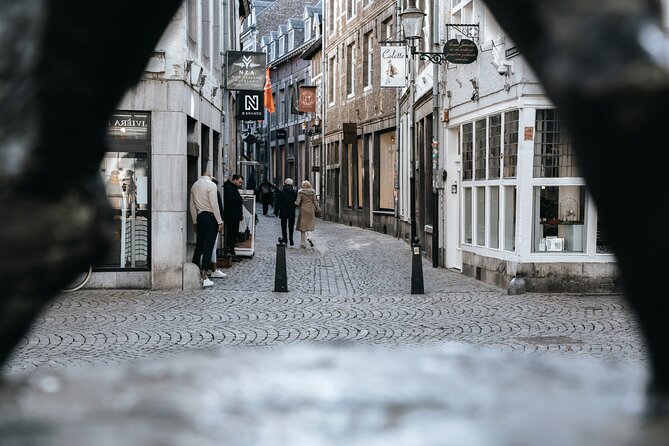
This is not a tour built around one grand monument. It is a guided walk through the way Maastricht has changed over centuries. You begin with Saint Servaas, cross a bridge with Roman roots, pass the old city hall, follow medieval defenses, and finish among churches and old neighborhoods.
That range is the strongest reason to book. You get a first map of the city, but you also get the stories that make the map useful. Maastricht has been a religious center, a border town, a fortified place, an industrial city, and a community with its own language and customs. Peter’s role is to connect those subjects without turning the walk into a school lecture.
The tour is private, so your group can ask for more Roman history, more military history, more architecture, or more social history. The available subjects also include the old Sphinx factory, Holland and Maastricht, the city’s condominium arrangement, and its industrial past.
The format suits a first visit. You can learn where the main squares and quarters are, then decide which places deserve a longer return visit. It also works well for families and mixed-age groups because the guide can adjust the amount of detail and keep the walk moving.
A few more things to do in Maastricht worth a look
- Maastricht Highlights, Architecture & Heritage Tour
★ 5.0 · 7 reviews - Maastricht Heritage and Nature Tour
★ 5.0 · 6 reviews - Amsterdam Food and Cultural Tour with Tastings
★ 5.0 · 2,442 reviews
Sint Servaas Church and the oldest bridge
The first stop is the Basilica of Saint Servaas, Maastricht’s church dedicated to its patron saint. In about ten minutes, you get the church’s connection to the city and a short account of Saint Servaas himself.
The church is an important starting point because Maastricht’s identity is closely tied to religion and pilgrimage. The stop is brief, and admission is not included, so you should not expect a full interior visit as part of the standard walk. If the church matters to you, ask Peter at the start whether more time can be set aside.
From there, the route reaches Sint Servaasbrug, the stone bridge associated with the Roman era and described as the oldest bridge in the Netherlands. The guide follows its story from ancient times through later changes to modern use.
A bridge is an ideal place for a city lesson. It explains how Maastricht grew around movement across the Maas and why the city mattered to rulers, merchants, soldiers, and religious visitors. The bridge stop is free and takes about ten minutes, so you will hear the key points without spending too long in one place.
Market Square, Minckelers, and the Sphinx connection
Market Square gives you one of the clearest looks at civic Maastricht. The old city hall anchors the square, while the statue of Jean-Pierre Minckelers recalls a local figure connected with gas lighting and science.
The nearby Sphinx factory adds an industrial thread to the walk. That is useful because Maastricht is easy to treat as a purely medieval or religious city. The factory area helps explain its working past and the changes that followed.
This stop is also practical for orientation. Market Square is one of the city’s central reference points, so hearing its story early helps you place the other quarters. Peter can also use it to explain subjects such as Maastricht’s relationship with the Netherlands and the city’s social development.
The stop is listed at about ten minutes. That is enough for an introduction, but not for a detailed architectural study of the city hall or a factory-focused tour. If industrial heritage is your main interest, request extra time when arranging the route.
Helpoort and the medieval defense line
Helpoort is one of the most memorable parts of the walk. It is the oldest surviving city gate in the Netherlands, and the route passes through or along this strong reminder of Maastricht’s military past.
Here, the tour becomes more than a list of dates. A gate tells you that Maastricht was protected, contested, and controlled. It also opens the door to stories about daily life, local rivalries, and the small bits of gossip that keep a defensive structure from feeling like a museum label.
The Father Vinck Tower follows with another piece of the medieval defense system. You hear how the tower worked and who friar Vinck was. The two stops belong together, but they are not identical: Helpoort gives you a major city entrance, while the tower offers a closer look at the people and structures behind the defenses.
The walking route includes the park and medieval fortifications in the wider selection of possible sights. Those paths can be pleasant, but you should be ready for regular walking over old streets and uneven surfaces. A moderate level of physical fitness is advised.
Same city, a different sort of day:
- Highlight Running Tour
★ 5.0 · 118 reviews - e-Scavenger hunt Maastricht: Explore the city at your own pace
★ 4.5 · 110 reviews - Maastricht: Museum of Illusions Entry Ticket
★ 4.2 · 82 reviews - Maastricht Privat Sightseeing City Walk
★ 5.0 · 76 reviews
Jekerkwartier and the story of Fons Olterdissen
The Monument to Fons Olterdissen sits in a quieter part of Jekerkwartier. This stop shifts attention from buildings and battles to local culture.
Olterdissen is presented as a Maastricht figure with a creative legacy, compared in spirit with Rodgers and Hart. The comparison gives you a quick sense of his importance to the city’s cultural life. It also shows how the tour moves beyond famous monuments to people who helped shape local identity.
Jekerkwartier is a good place for this pause. After the larger squares and fortifications, a quieter corner makes room for a more personal story. The stop lasts about ten minutes and is free, so it adds local character without affecting the price.
If you prefer only headline sights, this may feel less urgent than the basilica or bridge. I see it as one of the places that makes the tour feel local rather than like a basic checklist.
Stokstraatkwartier and the Roman settlement
The Stokstraatkwartier is the longest scheduled stop, at about twenty minutes, and that extra time makes sense. The quarter has been restored, but its appeal comes from the contrast between polished streets and a difficult past.
The area forms part of Maastricht’s oldest Roman settlement. That gives Peter a natural opening to discuss Roman influence and the city’s early development. You can also ask how the quarter changed over time and how restoration affected its appearance and role.
This is where the tour’s social history matters. Old streets are not only attractive backdrops. They also tell you who lived there, how the neighborhood was viewed, and what happened before restoration changed its image.
The starting point is on Stokstraat, and the route ends there as well. That makes the quarter easy to revisit later, perhaps when you want a slower look at its buildings and lanes.
Mestreechter Geis and local identity
The statue of De Mestreechter Geis is a short stop, only about five minutes, but it gives the tour a clear local theme. The figure represents the Maastricht spirit and the city’s way of life.
You will hear the name Mestreechter Geis again in the broader idea of the tour, because local identity is one of its main threads. Maastricht is in the Netherlands, but it has a strong regional character, distinct traditions, and its own way of presenting itself.
This stop works best when Peter explains the idea through examples and humor. It is not a major monument visit, and you will not spend long there. Its value is symbolic: it helps explain why Maastricht feels different from a standard Dutch city break.
Vrijthof and the city’s grand public square
Vrijthof is Maastricht’s main square and one of the places where the tour can follow your interests. Its buildings and open space bring together religious, civic, and public life.
The listed stop lasts about ten minutes, but the square can support several subjects. You can ask about the churches, the role of the square, local events, or the way Maastricht’s public life developed around it.
This is another spot where a short visit works well for orientation but may leave you wanting more. If you want detailed church interiors or architectural analysis, tell Peter before the walk begins. The flexible format is most useful when you use it.
Vrijthof also helps you understand the scale of the city center. After the narrower streets of Stokstraatkwartier and Jekerkwartier, the broad square gives the walk a different rhythm.
Our Lady Star of the Sea Basilica
The final listed stop is the Basilica of Our Lady Star of the Sea, known locally as Slevrouw. It sits on Onze Lieve Vrouweplein and is one of Maastricht’s most significant buildings.
The focus is the church and its statue of the Virgin Mary. This is a natural place to end because it brings the tour back to faith, pilgrimage, and the religious traditions that shaped the city.
The information provided describes this as a ten-minute stop, with admission listed as free. Even so, church access and available time can affect what you see on a particular day, so the standard experience should be understood as a guided introduction rather than a guaranteed extended interior visit.
The square also makes a pleasant final pause before returning to Stokstraat. You finish with a clear sense of how Maastricht’s religious center fits beside its Roman, medieval, and modern parts.
What the price means for your group
The listed price is $210.27 for a group of up to 15 people. That works out well for a family, a group of friends, or a small organized party. For fifteen people, the per-person cost is modest; for only two people, it is a more substantial private-guide purchase.
I would compare this with the value of your time. A private walk avoids a fixed group schedule and lets you request the subjects you care about. You are paying for a guide’s attention, local storytelling, and a route that can be adjusted, rather than simply paying for access to a monument.
No food or drinks are included. That is not a problem for a two-hour walk, but you should plan your own coffee stop or meal. The route begins and ends on Stokstraat, and pickup can be arranged together with the guide. You receive a call about ten minutes before meeting.
Confirmation is sent within 48 hours, subject to availability. Free cancellation is available up to 24 hours before the start time. Changes or cancellations inside that window are not accepted for a refund.
Who will get the most from this walk
I would choose this tour if you want a private introduction rather than a tightly scripted sightseeing circuit. It is especially useful when different people in your group want different things, because the route can be adjusted.
It suits visitors who like history with a human voice. Peter’s style includes humor, local gossip, anecdotes, and the occasional surprising connection. The strongest praise focuses on his intelligence, local insight, good humor, and ability to make facts easy to remember.
English is offered. Peter has also guided groups in German, but you should confirm the language you need when booking. Service animals are allowed, and the meeting area is near public transportation.
The walk requires moderate physical fitness. You should be comfortable walking through the center for about two hours, with possible time in park areas and around older defenses. If anyone in your group needs a slower pace, say so at the beginning.
My booking advice
Book this tour if you want Maastricht explained by a local guide who can move between Roman remains, churches, city defenses, industry, and everyday identity. The private price is sensible for a larger group, and the flexible format is more useful than a fixed route if you already know what interests you.
Think twice if you want long interior visits, a museum tour, or a tightly timed record of every monument. The standard two-hour walk gives you a broad and entertaining framework. Use it to get your bearings, ask for the subjects you care about, and mark places to revisit on your own.
FAQ
How long does the Maastricht tour last?
The standard experience lasts about two hours. The route can be adjusted from about 1.5 hours to a full day, depending on what your group requests.
How much does the tour cost?
The price is $210.27 per group, for up to 15 people.
Who guides the tour?
The guide is Peter Corsius. English is offered, and German-language guiding is also associated with the experience, but you should confirm your preferred language when booking.
Where does the tour start and end?
The listed meeting point is Stokstraat, 6211 Maastricht, Netherlands. The tour ends on Stokstraat as well. Pickup details are arranged with the group, and the guide calls about ten minutes before the meeting.
Are food and drinks included?
No. Coffee, tea, other beverages, and food are not included unless specifically arranged in the offer to your group.
Can I cancel for a full refund?
Yes. You can cancel at least 24 hours before the experience start time for a full refund. Cancellations or changes made less than 24 hours before the start are not accepted for a refund.
Just added in Maastricht
- Maastricht 2-Hour Walking Tour | Discover The City With A Local★ 4.5 · 57 reviews
- Maastricht Highlights, Architecture & Heritage Tour★ 5.0 · 7 reviews
- e-Scavenger hunt Valkenburg: Explore the city at your own pace★ 4.5 · 20 reviews
- Maastricht Medieval Mystery: Interactive City Game & Tour★ 4.0 · 25 reviews
- Discover Maastricht with a self-guided Outside Escape city game★ 5.0 · 29 reviews
- Maastricht Evening Sightseeing Tour★ 4.5 · 7 reviews
- Maastricht Private Walking Tour With A Professional Guide★ 4.0 · 6 reviews
- Maastricht Heritage and Nature Tour★ 5.0 · 6 reviews
Historical Tours, compared.

Amsterdam Food and Cultural Tour with Tastings
Read our review →
Kinderdijk UNESCO World Heritage Entry Ticket
Read our review →
Hop-on Hop-off Old-Fashioned Heritage Tram Tour
Read our review →

Amsterdam High-End Dutch Food & History Tour – Up to 8 guests
Read our review →
Cruise through the Historic City Center with Guide
Read our review →
Browse the lists this tour appears in