
Reviewed · HISTORICAL TOURS
LGBTQI+ History Tour of Amsterdam
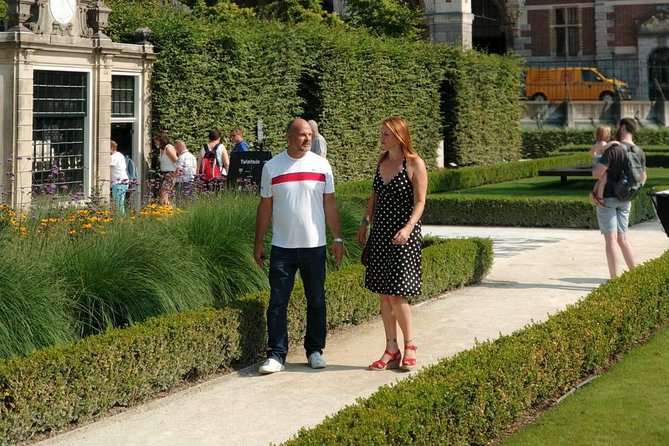
Amsterdam’s LGBTQI+ story comes alive through places you might otherwise pass without a second glance. On this two-hour walk with Henk, you’ll connect the Homomonument, Dam Square, the Royal Palace, the Red Light District, Chinatown, and one of the city’s oldest gay bars.
I like the personal angle, especially because Henk lived through the early years of Amsterdam’s gay movement. I also like the small-group limit of 15, which gives you room to ask questions. The main drawback is that this is a walking tour with no indoor palace visit, so bring good shoes, water, and weather protection.
Key points
- Personal guide: Henk combines Amsterdam’s LGBTQI+ past with his own memories and reflections.
- The Homomonument: Learn why Amsterdam became home to the world’s first monument honoring gay victims of persecution.
- City history included: Canals, 17th-century houses, Dam Square, and the Royal Palace all help frame the LGBTQI+ story.
- Café ’t Mandje: Finish at the former bar of Bet van Beeren on Zeedijk, a major stop in Amsterdam’s lesbian and gay history.
- Small English-language group: The tour accepts a maximum of 15 people and welcomes straight allies.
- Practical value: The $42.33 price covers a focused two-hour guided walk, but not drinks, food, or palace admission.
Why this Amsterdam LGBTQI+ tour feels different
Many city walks point out old buildings, canals, and famous squares. This one asks you to look at those same streets through the lives of LGBTQI+ people who lived, worked, organized, loved, and fought for rights there.
That shift in viewpoint is the real reason to book. You are not simply collecting landmarks. You are learning how public spaces can carry memories of fear, courage, loss, celebration, and political change.
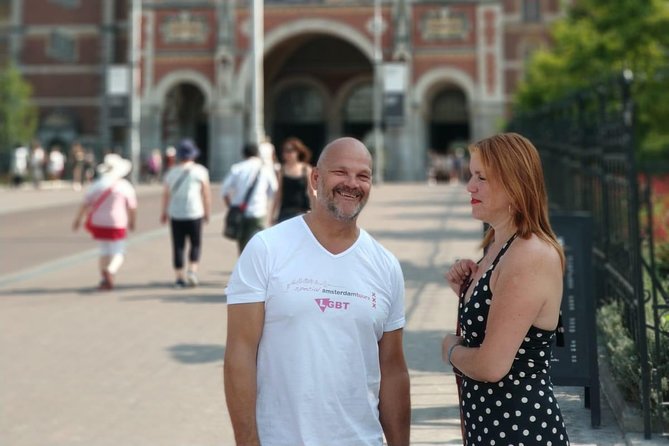
Henk is central to the experience. He is not only presenting dates and names from a script. He lived through the beginning of Amsterdam’s gay movement, so the tour can move between public history and personal memory. He also brings in literature, art, politics, Dutch poetry, and stories about the city itself.
I would choose this walk early in an Amsterdam visit if you want more context for the city. It can shape how you see later stops, from the canals to the nightlife district. If you have already done several general walking tours, the LGBTQI+ focus gives you a fresh reason to explore the center again.
The tone is warm and serious in equal measure. Henk uses humor, but he does not avoid difficult subjects, including persecution, the AIDS crisis, and the long struggle for civil rights. You should expect moments that are moving as well as informative.
A few more things to do in Amsterdam worth a look
- Amsterdam Food and Cultural Tour with Tastings
★ 5.0 · 2,442 reviews - Amsterdam: Haunted History and Ghost Walking Tour
★ 4.5 · 488 reviews - Amsterdam High-End Dutch Food & History Tour – Up to 8 guests
★ 5.0 · 482 reviews
Starting at the Homomonument on Westermarkt
The tour begins at Westermarkt 2L, beside the Homomonument. This is not a quick photo stop. It receives about 30 minutes, making it the longest scheduled stop on the walk.
Henk explains how the Netherlands came to have what is described as the world’s first monument for gay victims, and why the monument speaks to the past, present, and future. That wording matters. The site is not only a memorial to people who suffered before modern LGBTQI+ rights. It also asks you to think about rights that still need protection.
Starting here gives the tour a clear purpose. You begin with remembrance, then walk into the city to see how LGBTQI+ life has been shaped by streets, businesses, politics, and social change.
The stop is included in the tour price, and no separate admission ticket is needed. Since the meeting point is outdoors, Amsterdam’s weather matters from the first minute. The tour provider notes that the activity requires good weather, so a cancellation caused by poor conditions may lead to a new date or a full refund.
Canals, 17th-century houses, and the city behind the story
From Westermarkt, you walk along the canals toward Dam Square. This section is useful because it connects LGBTQI+ history with the physical design of Amsterdam.
Henk explains the 17th-century houses and the city planning behind the canal district. The tour presents Amsterdam’s planning as an early example of large-scale urban design, giving you more to notice than picturesque façades and narrow buildings.
You should not expect a long architectural lecture. The point is to understand the city as a place built for commerce, residence, movement, and social life. That setting influenced where people met and how communities formed.
This portion also gives the walk a pleasant rhythm. You move between focused storytelling and ordinary city scenes. Keep your eyes open for uneven pavement, bicycles, and crowded crossings. Amsterdam is easy to walk, but it demands attention, especially around the central canals.
The Royal Palace and gay life in the 17th century
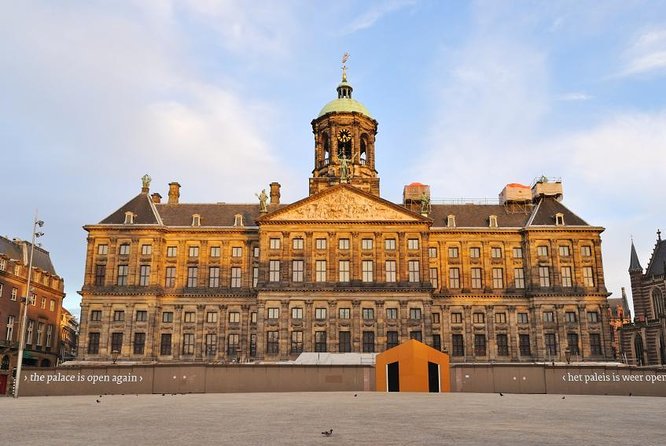
At Dam Square, the route pauses near the Royal Palace Amsterdam. You will hear how the palace began and what it has to do with gay life in the 17th century.
The connection is one of the tour’s more unusual turns. It places LGBTQI+ life inside the wider story of Amsterdam’s political and social center, rather than treating it as a separate subject confined to modern nightlife.
The palace itself is not part of the tour visit. Admission is not included, and the two-hour schedule does not allow time to go inside. If you want to see the interior, plan a separate visit. That is a fair limitation, but it is worth knowing before you arrive so you do not expect a palace tour.
The exterior stop lasts about 15 minutes. It works best as historical context rather than a major sightseeing visit. You will get more from it if you are interested in how public institutions, power, and private lives intersected in earlier centuries.
Same city, a different sort of day:
- Amsterdam: Van Gogh Museum Ticket
★ 4.7 · 52,054 reviews - Amsterdam Classic Saloon Boat Cruise with Drinks and Cheese
★ 5.0 · 31,825 reviews - Amsterdam Luxury Canal Cruise + Unlimited Drinks & Bites option
★ 5.0 · 30,518 reviews - Amsterdam: Heineken Experience Ticket
★ 4.6 · 30,055 reviews
Dam Square and the center of public life
Dam Square is the next major stop, with about 10 minutes devoted to its long history and LGBTQI+ connections.
This is Amsterdam’s central square, so you are likely to encounter plenty of movement around you. The value of stopping here is not silence or solitude. It is the chance to understand how a public square can hold many layers of civic life, protest, ceremony, commerce, and social change.
Henk links the square’s general story to LGBTQI+ Amsterdam. That keeps the tour from becoming a list of isolated bar addresses. You see how queer history belongs in the main story of the city, including its most public spaces.
Because Dam Square can be busy, stay close to the group and listen carefully. The maximum group size is 15, which helps, but the guide is still speaking outdoors in an active part of town.
Through the Red Light District and Amsterdam’s leather street
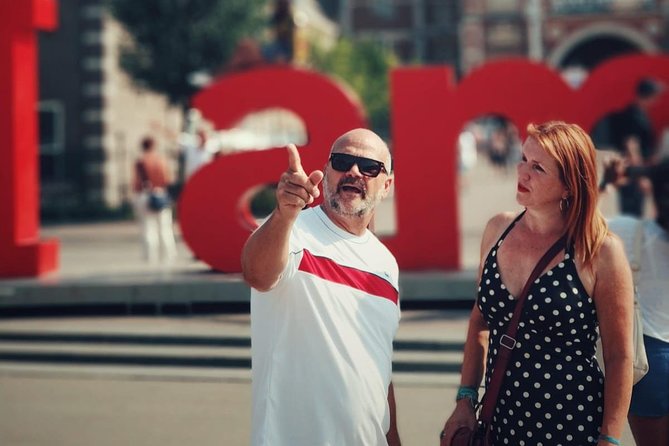
The walk continues toward the Red Light District. This section explores the area’s LGBTQI+ connections and identifies what is described as Amsterdam’s leather street.
The content here is likely to be more useful for adults interested in social history than for anyone seeking a general sightseeing stroll. Henk invites questions about the Red Light District, so this is a good point to ask about details that interest you.
The route treats the district as part of Amsterdam’s history rather than as a spectacle. That distinction is important. You are walking through a working neighborhood and should show the same basic respect you would anywhere else. The tour’s LGBTQI+ lens gives the area additional context, but it does not turn every doorway into a formal attraction.
This is also a section where the tour’s personal guide makes a difference. Henk can explain how nightlife, sexuality, public attitudes, and changing ideas of rights fit together. The available information does not promise specific venue visits, so think of this as an outdoor discussion while walking.
Chinatown, the oldest gay bar, and the story of Bet van Beeren
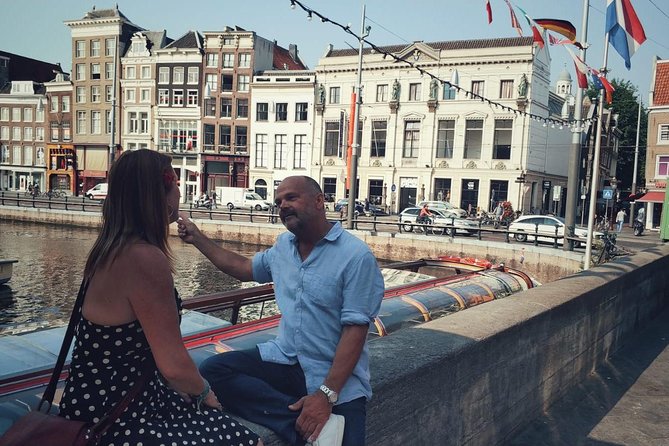
Near the end, the route passes through Chinatown, once known as one of the roughest streets in Amsterdam. Henk explains the area’s connection to LGBTQI+ life and why German soldiers were not allowed in this part of the city during the Second World War.
That detail shows the kind of layered storytelling you can expect. The tour moves from urban history to wartime memory, then back to the city’s gay social world.
The walk finishes at Café ’t Mandje, at Zeedijk 63. The bar was associated with Bet van Beeren and is presented as one of the oldest gay bars in Amsterdam. It is also described as one of the oldest lesbian-owned bars in the city, making it a fitting final stop for a tour that gives space to lesbian history as well as broader LGBTQI+ experiences.
Finishing here is a strong choice. The tour begins with a memorial and ends with a place connected to everyday social life. One site honors those who suffered. The other recalls a bar where people could meet, talk, and build community.
The end point is within walking distance of Amsterdam Central Station. You do not have to return to Westermarkt, which is useful if you are continuing with sightseeing or catching a train.
Henk’s style: personal, warm, and willing to tackle hard subjects
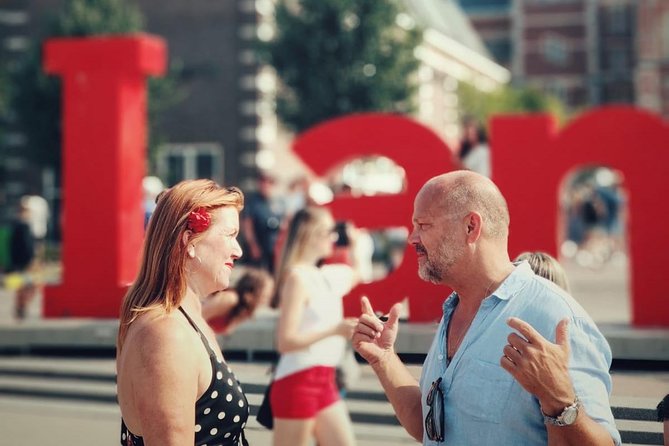
The strongest reason to choose this tour is Henk himself. He brings a personal connection to the material, along with facts, anecdotes, humor, and short pieces of Dutch poetry.
That mix gives the walk a human shape. You are not only hearing when laws changed or monuments were built. You are also hearing how social attitudes affected people’s lives and why preserving community memory matters.
Henk’s approach is not limited to one identity or audience. Straight allies are explicitly welcome, and the tour is framed so people of any gender, gender expression, or sexual orientation can follow the story. You do not need to arrive with specialist background.
At the same time, this is not a light entertainment tour with a rainbow theme added on top. The material can become emotional, especially when discussing the loss of loved ones to AIDS and the cost of earlier discrimination. If you want a purely cheerful introduction to Amsterdam, choose a canal cruise or general city walk instead.
You should also expect a guide-led experience rather than a self-directed museum visit. Henk’s personality and storytelling style shape the day. That is a benefit if you enjoy conversation and personal detail. It may be less appealing if you prefer a silent audio guide or tightly timed historical presentation.
Is $42.33 a fair price for two hours?
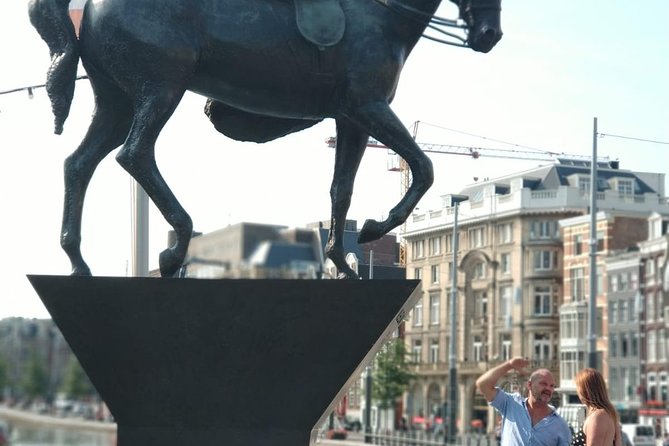
At $42.33 per person, the tour costs more than a free self-guided walk, but the comparison is not quite fair. You are paying for a focused subject, a local guide with personal experience, and the chance to ask questions as you move through central Amsterdam.
The price includes the tour escort and the scheduled walking route. It does not include drinks, food, water, walking shoes, or admission to the Royal Palace. Since the palace is only viewed from outside, you will not face an unexpected entrance fee during the tour, but you should budget separately if you want to visit it later.
The small-group cap improves the value. With no more than 15 participants, you have a better chance of hearing the guide and asking about topics that matter to you. The experience is not a private tour, however, so do not expect the entire route to be tailored to one person.
For me, the price makes sense if LGBTQI+ history is a main interest, or if you have already covered Amsterdam’s standard sights. It is less compelling if your main goal is interior access, major museum visits, or a broad overview of every Amsterdam attraction.
Practical details before you book
The walk starts at 11:00 a.m. at Westermarkt 2L. Allow enough time to reach the meeting point, and confirm the exact details on your booking confirmation.
The tour is offered in English and lasts about two hours. Wear walking shoes and bring your own water. You will be outside for the full route, so a rain jacket or compact umbrella is sensible in Amsterdam.
Service animals are allowed, and the activity is near public transportation. The provider says most people can participate, but the tour still involves continuous city walking, uneven surfaces, and busy streets. If you have specific mobility concerns, contact the provider before booking rather than assuming the route will suit you.
Straight allies are welcome. The small group may include people with different levels of familiarity with LGBTQI+ history, so bring questions and give the guide room to explain terms or events fully.
Free cancellation is available up to 24 hours before the start time for a full refund. Changes or cancellations made inside that 24-hour window are not accepted for a refund. The experience can also be canceled if the weather is poor or if the minimum number of participants is not reached. In either case, you are offered another date or experience, or a full refund.
Who should book this walk?
I would recommend it to LGBTQI+ visitors who want Amsterdam’s past presented through community memory, not just famous landmarks. It also suits allies, couples, solo visitors, and anyone who wants a thoughtful subject-focused walk through the center.
It is especially useful early in your stay. You will pass through places you may revisit later, and Henk’s explanations can give those streets more meaning.
Choose something else if you want a palace interior, museum admission, a food stop, or a tour devoted mainly to architecture. This walk is about stories, public memory, and people. Its strongest moments come from Henk’s personal connection to the subject and the way he links LGBTQI+ life to ordinary Amsterdam streets.
If that sounds like the kind of city experience you value, I would book it. The Homomonument, the story of Bet van Beeren, the Red Light District, and Henk’s memories give you a side of Amsterdam that a standard canal tour cannot provide.
FAQ
How long does the LGBTQI+ History Tour of Amsterdam last?
The tour lasts approximately two hours.
What time does the tour start?
It starts at 11:00 a.m.
Where does the tour begin?
The meeting point is Westermarkt 2L, 1016 DW Amsterdam, Netherlands.
Where does the tour end?
The tour ends at Café ’t Mandje, Zeedijk 63, 1012 AS Amsterdam. The end point is within walking distance of Amsterdam Central Station.
Is the tour offered in English?
Yes. The tour is offered in English.
How many people can join the tour?
The maximum group size is 15 participants.
Is admission to the Royal Palace included?
No. The group sees and discusses the Royal Palace from outside, but there is no time to visit the interior and admission is not included.
Can I cancel for a full refund?
Yes. You can cancel at least 24 hours before the start time for a full refund. Poor weather or failure to reach the minimum number of participants may also lead to a new date or a full refund.
Just added in Amsterdam
- Guided Day Trip – Volendam, Zaanse Schans, Marken & Edam★ 4.0 · 232 reviews
- Private Tour Zaanse Schans Windmills and Volendam in Jaguar★ 5.0 · 10 reviews
- Zaanse Schans and Giethoorn Unique Day Trip with Boat Cruise★ 4.5 · 17 reviews
- Half-Day Private Guided Sightseeing Tour of Zaanse Schans★ 5.0 · 14 reviews
- Zaanse Schans Private Tour Windmills★ 5.0 · 18 reviews
- Private bike tour: Hidden gems around Amsterdam and surroundings★ 5.0 · 4 reviews
- Bike tour in Amsterdam with an Italian guide★ 5.0 · 15 reviews
- Amsterdam Sightseeing Tour + Hidden Gems + Tastings + PDF guide★ 5.0 · 35 reviews
Historical Tours, compared.
Amsterdam Food and Cultural Tour with Tastings
Read our review →
Kinderdijk UNESCO World Heritage Entry Ticket
Read our review →
Hop-on Hop-off Old-Fashioned Heritage Tram Tour
Read our review →
Amsterdam High-End Dutch Food & History Tour – Up to 8 guests
Read our review →
Cruise through the Historic City Center with Guide
Read our review →
Browse the lists this tour appears in