
Reviewed · RED LIGHT DISTRICT TOURS
MUST DO: Amsterdam’s Red Light District tour with a local
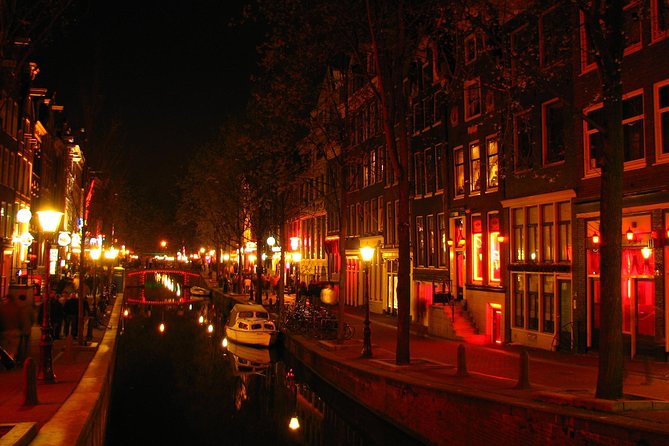
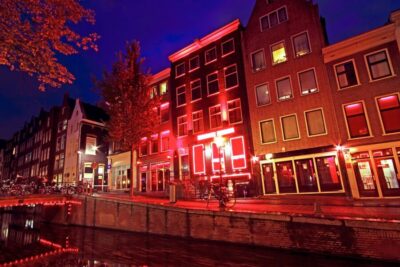
Amsterdam’s Red Light District is far more than glowing windows and curious onlookers. This two-hour evening walk places the area in its older setting, where medieval gates, crooked houses, wooden foundations, cafés, sex businesses, and modern cannabis culture all occupy the same tight streets. The guide-led format helps you see the district as part of Amsterdam’s past and present, not just as a spectacle.
I like the strong mix of local history and current life, especially the stops at the Waag and Int Aepjen, one of only two surviving wooden buildings in Amsterdam. I also like the way the walk is done on foot, since the narrow lanes and small details are easy to miss from a vehicle. The main drawback is that the guide quality can vary, and you must arrive exactly on time if you want to avoid missing the group.
Key points to know before booking
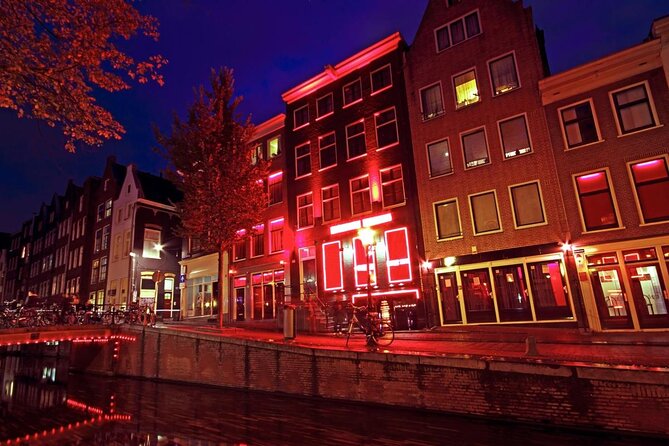
- The walk begins at Geldersekade 2, in Amsterdam’s Old Town, and returns there after about two hours.
- The Red Light District is only part of the subject, with much of the walk focused on Amsterdam’s origins, buildings, customs, and trade.
- Guides have included Ben, Robin, Sander, and Max, with English used throughout.
- The route includes unusual sights, including Int Aepjen, the Waag, the smallest house, and a condom shop dating from 1987.
- The group may include up to 20 people, so this is not always the intimate private walk the wording might suggest.
- The price is about $31.32 per person, with food and drinks not included.
Why this Amsterdam walk is more than a red-light spectacle
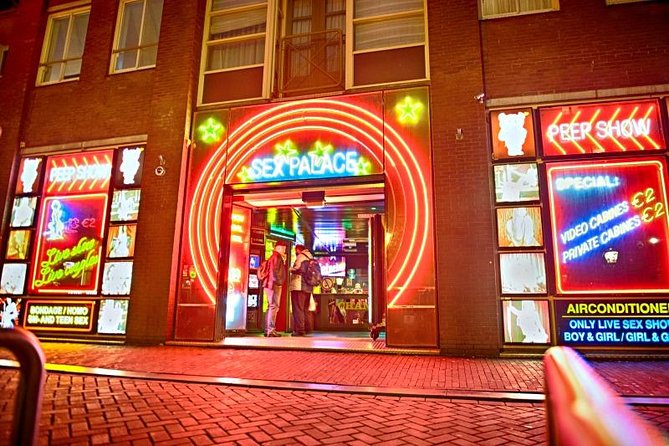
The best reason to book this tour is the setting. Amsterdam’s Red Light District occupies part of the Old Town, the oldest section of the city, so the streets tell several stories at once.
You may pass a working red-light window, then turn a corner and hear about medieval defenses, trade guilds, or the wooden poles holding up Amsterdam’s buildings. That contrast gives the walk its value. You are not simply being shown where the district is. You are being given a framework for understanding why it developed here and how it fits into the wider city.
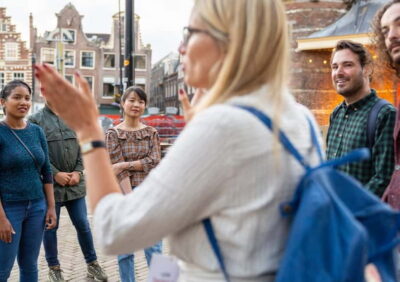
The tour is also a useful choice if you are visiting Amsterdam for the first time. The narrow streets can feel confusing after dark, and a local guide gives you a route through the area instead of leaving you to wander without context. You will still see the district’s famous sights, but the focus is on explanation rather than shock value.
The tone is not fixed from guide to guide. Ben has been praised for lively stories and clear explanations, while Robin has added local tips and recommendations. Sander and Max have also led the walk, with Max’s version described as humorous and less narrowly focused on the Red Light District. That variation can be a plus, but it also means your experience depends heavily on who leads the group.
Other Red Light District walks in Amsterdam:
- Amsterdam: Red Light Secrets Museum Entry Ticket
★ 4.2 · 5,722 reviews - Amsterdam: Red Light District Tour in German/English/Italian
★ 4.9 · 5,623 reviews - Amsterdam Red Light District & Coffee Shop Tour
★ 4.6 · 4,134 reviews
Meeting Amsterdam at Geldersekade 2
The meeting point is Geldersekade 2, 1012 BH Amsterdam. This puts you close to the old center and within reach of public transportation, though the tour itself is entirely on foot.
Plan to arrive early. One particularly unhappy experience followed a two-minute delay at a 6 p.m. start during icy weather. The operator stated that the guide waited until 6:10 and attempted to call and text, while the booking holder said the group had already gone. A full refund was processed, but the lesson is plain: do not treat the meeting time casually.
A few minutes early also gives you a chance to find the starting point without rushing. Since the walk uses narrow streets and evening conditions, comfortable shoes and a warm outer layer make sense. The route is not recommended for people with limited mobility, and uneven or crowded streets may make the walk tiring.
The experience ends back at the meeting point. That is handy if you want to continue exploring the Old Town afterward, but food and drinks are not included, so plan your café or dinner stop separately.
Wooden poles and the city built on trees
One of the most useful early explanations concerns Amsterdam’s ground. Much of the city rests on a thick layer of fen and clay, with water close below. Older buildings were supported by wooden poles driven through the soft ground until they reached a firm sandy layer about 11 meters down.
This is the sort of detail that changes the way you look at Amsterdam. Crooked façades and leaning houses are not just charming photo subjects. They reflect the practical challenge of building a city on wet, unstable soil.
The guide connects this engineering problem to the city’s older growth. You begin to see Amsterdam as a place shaped by water, trade, timber, and constant adjustment. For me, this is one of the walk’s strongest features because it gives the district a physical explanation before the tour turns toward its more controversial present.
Int Aepjen, the wooden pub from around 1540
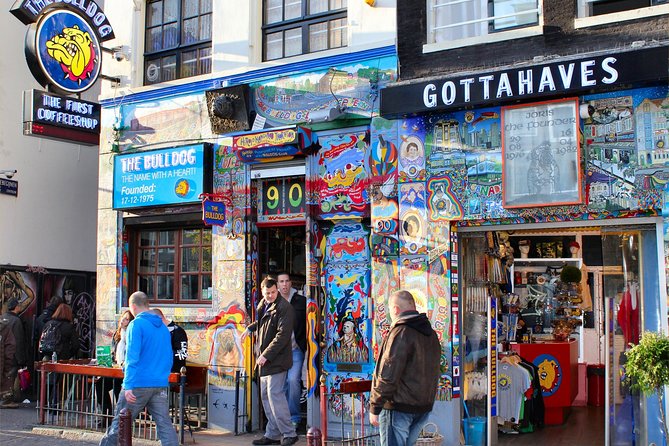
The stop at Pub The Ape, known in Dutch as Int Aepjen, adds a memorable bit of architectural history. Built around 1540, it is one of only two remaining wooden buildings in Amsterdam.
That survival is unusual because a major fire in 1452 led the authorities to require brick façades on buildings. Int Aepjen therefore offers more than a pub photo. It shows what Amsterdam’s buildings looked like before fire regulations changed the character of the city.
You may not spend much time inside, and food and drinks are not part of the tour. Still, the building is a good example of how this route works best. A place that could seem like just another old bar becomes a clue to the city’s building rules and past dangers.
Same city, a different sort of day:
- Amsterdam: Van Gogh Museum Ticket
★ 4.7 · 52,054 reviews - Amsterdam Classic Saloon Boat Cruise with Drinks and Cheese
★ 5.0 · 31,825 reviews - Amsterdam Luxury Canal Cruise + Unlimited Drinks & Bites option
★ 5.0 · 30,518 reviews - Amsterdam: Heineken Experience Ticket
★ 4.6 · 30,055 reviews
The Waag and the old city gate
The Waag is another major historical stop. It began as one of Amsterdam’s city gates and formed part of the defensive wall in the 1400s. It is also described as the second-oldest building in Amsterdam.
Later, the building housed guilds, the organizations that represented craftsmen and tradespeople. Its position near the square helps you picture the old city as a working center, not simply a tourist district.
This stop is especially helpful if the Red Light District feels like an isolated entertainment zone. The Waag reminds you that the area grew from a medieval town with walls, trades, markets, and civic needs. The guide’s explanation can turn a quick look at a stone building into one of the walk’s clearest lessons.
The smallest house and Amsterdam’s tight spaces
The route also points out Amsterdam’s smallest house, built around the 1700s. It was first used as a storage place for the Dutch East India Company, known as the VOC, and later became a home.
The building makes sense in a city where land was valuable and houses were squeezed into narrow plots. It also connects the district to Amsterdam’s trading era, when storage, shipping, and commerce shaped daily life.
This is a quick stop, but it gives the walk a welcome change of scale. After hearing about city gates and defensive walls, you are looking at one small building and the practical ways people made use of every bit of space.
The sex industry, cannabis culture, and the modern district
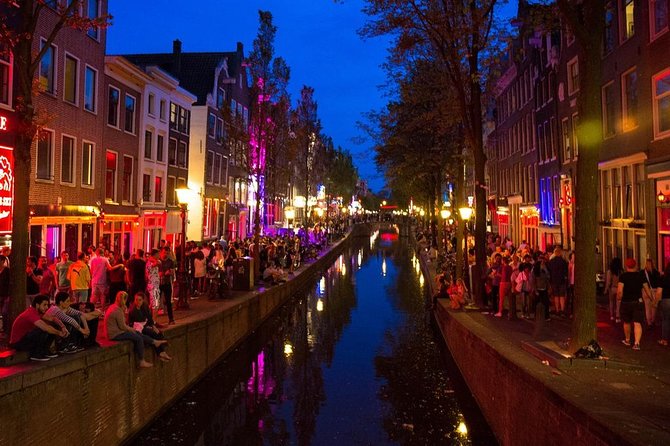
The Red Light District portion addresses the area’s sex industry and its present-day situation. The guide provides context about the businesses and customs rather than simply leading you past the windows.
The walk may also include a cannabis shop. That detail matters because Amsterdam’s visitor image often reduces the city to two subjects: sex and cannabis. A good guide places both within the wider story of Dutch tolerance, regulation, commerce, and neighborhood life, while recognizing that the area is also a real community and workplace.
Do not expect the entire two hours to focus on adult entertainment. One version of the walk was described as only about 15 percent Red Light District material, with the rest devoted to Amsterdam’s past and general local information. That will suit you if you want context, but it may disappoint you if you expect a long, detailed discussion of every aspect of the sex industry.
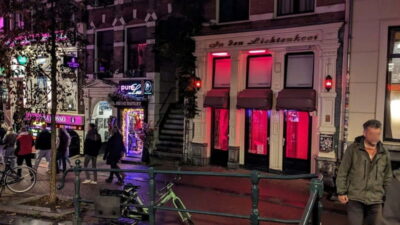
The later evening departure gives the district a different atmosphere from a daytime sightseeing walk. Windows are more visible, streets may feel more charged, and the guide can explain what you are seeing as you pass through. Still, this is a public walking tour, not a private visit into the businesses themselves. Be respectful about photography and avoid treating people working in the area as attractions.
A stop at the world’s first condom shop
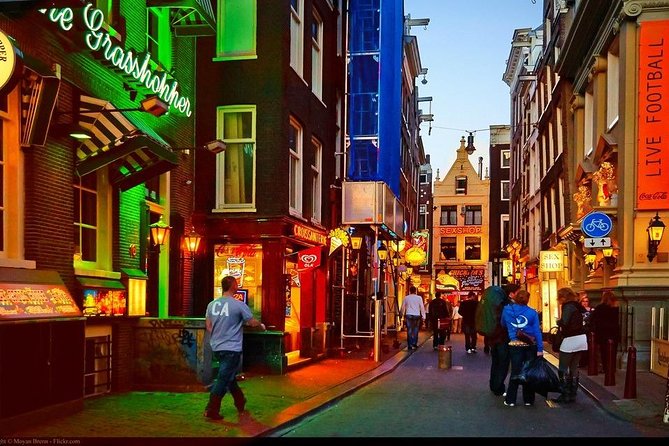
The tour includes a shop dedicated to condoms that has been in place since 1987. It is described as the world’s first shop specializing in condoms and sells unusual options, including size-customized condoms.
This stop is clearly meant to be lighthearted, but it also fits the tour’s broader aim. Amsterdam’s adult businesses are not only window displays. They are part of a commercial district with shops, services, tourism, and changing public attitudes.
You can enjoy the oddity without making it the whole point. The stop works best when the guide uses it to explain how the district presents itself and how adult tourism has become part of the local economy.
How much history will you actually get?
Quite a lot, if you enjoy stories about buildings and city development. The listed route includes foundations, the Old Town, Int Aepjen, the Waag, the smallest house, the condom shop, and the Red Light District’s current situation.
The strongest guides make these subjects feel connected. Ben has been praised for bringing Amsterdam’s past to life with anecdotes. Other guides have been described as clear, funny, and good at offering local tips. That is exactly what you want on a walk through a crowded historic center: facts that are easy to remember and tied to the street in front of you.
The weaker possibility is a guide who walks ahead while talking, making it difficult for everyone to hear. One low-rated experience described that problem even though the group was small. If you cannot hear the guide, the whole value of a history walk drops quickly, so stay near the guide and speak up if the group begins to spread out.
Is $31.32 a fair price?
At about $31.32 per person, the tour is reasonably priced for a two-hour guided walk in central Amsterdam. You are paying for a local English-speaking guide, a planned route, and explanations you would be unlikely to gather from street signs alone.
The value is strongest if this is your first time in Amsterdam or your first visit to the Red Light District. You get orientation, background, and a safer-feeling way to approach a sensitive area without having to work out the context yourself.
The value is weaker if you have already taken several Old Town walks or mainly want a detailed examination of sex work. A portion of the route covers general Amsterdam history, and food, drinks, and any purchases are extra. Groups can reach 20 people, so you are not always buying a highly personal conversation with the guide.
I would consider the price fair for a first evening introduction, especially if the tour helps you decide where to return later. It is less compelling as a repeat visit unless you particularly enjoy urban history or happen to get a guide whose stories add something new.
Who should book this walk?
I would suggest it to first-time visitors, curious adults, and anyone who wants to understand the Red Light District rather than simply look at it. It also suits people who enjoy architecture, old city stories, and unusual local details.
The walk can work for older teenagers depending on the departure time and the group’s expectations. One family selected an earlier 6 p.m. version as a more family-friendly option for a 17-year-old and found it suitable. The later tour was considered better for adults only.
This is not the best pick for anyone with limited mobility, anyone who dislikes evening walking, or anyone who needs a very small, quiet group. It is also not ideal if you want a meal, drinks, or an activity with guaranteed one-on-one attention.
The tour is offered in English and supports mobile tickets. Service animals are allowed, and the meeting point is near public transportation. Free cancellation is available until 24 hours before the start time. After that point, cancellation or changes are not accepted, so keep the local cut-off time in mind.
Should you book Amsterdam’s Red Light District tour?
Book it if you want the district explained through Amsterdam’s buildings, trade, customs, and modern adult culture. The Waag, Int Aepjen, the smallest house, and the wooden foundation story give the walk more substance than a simple red-light stroll.
I would book it early in your stay, since the route can help you understand the Old Town and point you toward places worth revisiting. Arrive early, wear good shoes, stay close enough to hear the guide, and keep your expectations realistic about the balance of history and adult subject matter.
Skip it if you want a strictly private experience or a tour devoted almost entirely to sex work. For most first-time visitors who want a thoughtful, good-value introduction to one of Amsterdam’s most misunderstood districts, it is a sensible two-hour choice.
FAQ
How long does the Amsterdam Red Light District tour last?
The tour lasts approximately two hours.
Where does the tour start?
It starts at Geldersekade 2, 1012 BH Amsterdam, Netherlands.
Where does the tour end?
The activity ends back at the meeting point.
Is the tour offered in English?
Yes. The tour is offered in English.
What is included in the price?
The price includes a two-hour walking tour with a local guide.
Are food and drinks included?
No. Food and drinks are not included.
How many people can join the tour?
The maximum group size is 20 people.
Can I cancel for a full refund?
Yes, if you cancel at least 24 hours before the experience begins. Cancellations made less than 24 hours in advance are not refunded, and changes during that period are not accepted.
Just added in Amsterdam
- Guided Day Trip – Volendam, Zaanse Schans, Marken & Edam★ 4.0 · 232 reviews
- Private Tour Zaanse Schans Windmills and Volendam in Jaguar★ 5.0 · 10 reviews
- Zaanse Schans and Giethoorn Unique Day Trip with Boat Cruise★ 4.5 · 17 reviews
- Half-Day Private Guided Sightseeing Tour of Zaanse Schans★ 5.0 · 14 reviews
- Zaanse Schans Private Tour Windmills★ 5.0 · 18 reviews
- Private bike tour: Hidden gems around Amsterdam and surroundings★ 5.0 · 4 reviews
- Bike tour in Amsterdam with an Italian guide★ 5.0 · 15 reviews
- Amsterdam Sightseeing Tour + Hidden Gems + Tastings + PDF guide★ 5.0 · 35 reviews
Red Light District Tours, compared.
Red Light District Tour in German/English/Italian
Read our review →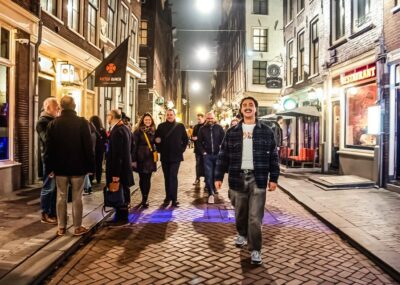
Amsterdam Red Light District & Coffee Shop Tour
Read our review →
Red Light District Pub Crawl with Unlimited Shots
Read our review →

Browse the lists this tour appears in