
Reviewed · RED LIGHT DISTRICT TOURS
Private Amsterdam Red Light District tour with food tastings
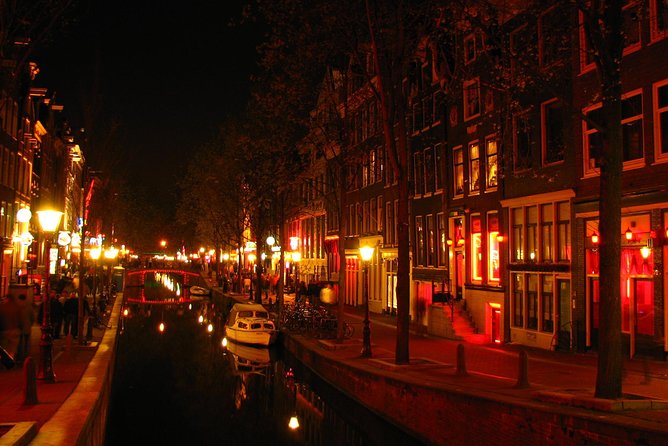
Amsterdam’s Red Light District is more than neon windows. It is the city’s oldest quarter, where medieval gates, a centuries-old wooden pub, Chinatown, prostitution, coffeeshop culture, and a condom shop all share a few compact streets. This private two-hour walk gives you a guide to explain how those pieces fit together, with food tastings to break up the sightseeing.
I like the custom route, since you can steer the conversation toward architecture, local culture, or the district’s working history. I also like the small-group format: guides such as Aaron, Sander, and Tony have been praised for clear explanations, humor, and a pace that can match your needs.
The main drawback is the price, $121.52 per person, which is a serious sum for a two-hour walk. You are paying for privacy and flexibility rather than major admissions, since the landmarks are viewed from outside and food tastings are part of the walk rather than a full meal.
Key points to know before you book
- The route covers Amsterdam’s oldest core: You pass the Dam, the Old Church area, Waag, Chinatown, and several unusual small landmarks.
- Your guide can adjust the focus: Ask for more history, more discussion of prostitution and coffeeshop culture, or a slower pace.
- Food tastings add a local break: The stops are part of the two-hour route, though the exact foods and venues are not specified.
- It is fully private: Only your own group takes part, useful for families, couples, or friends who want to ask direct questions.
- The guides set a friendly tone: Aaron, Sander, and Tony are specifically praised for information, humor, patience, and good pacing.
- Plan for a short walking introduction: This is best for getting oriented, not for visiting every museum or entering every landmark.
Why this Red Light District walk has more to it than neon
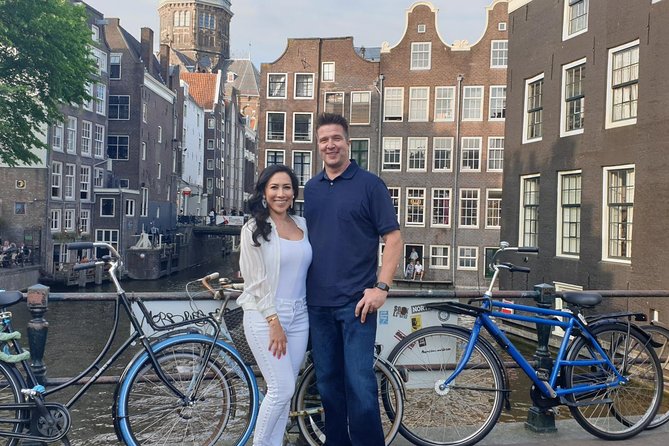
The best reason to take this tour is context. On your own, it is easy to see the Red Light District as a row of windows and coffee shops, then move on. A private guide can place the area within Amsterdam’s older story, explaining how trade, religion, city defenses, housing, sex work, and modern tolerance developed side by side.
The district is part of the Old Town, the oldest section of Amsterdam. That matters because the streets are not simply arranged around today’s nightlife. They reflect a much older city, built beside water and shaped by trade.
You will also hear about prostitution and coffeeshop culture directly, rather than having to rely on guidebook shorthand. The subject calls for a sensible tone. This tour appears designed to explain how these activities fit into Amsterdam, not merely to point out the most famous windows.
Because the tour is private, you can ask questions that might feel awkward in a large group. You can also tell your guide what interests you most. If the history of the city appeals to you more than nightlife, say so. If you want to understand the district’s present-day culture, make that clear at the start.
Other Red Light District walks in Amsterdam:
- Amsterdam: Red Light Secrets Museum Entry Ticket
★ 4.2 · 5,722 reviews - Amsterdam: Red Light District Tour in German/English/Italian
★ 4.9 · 5,623 reviews - Amsterdam Red Light District & Coffee Shop Tour
★ 4.6 · 4,134 reviews
Starting at the Dam and looking beneath Amsterdam
The walk includes the Dam, one of the city’s key central spaces. Here, the guide explains an odd but important fact about Amsterdam: much of the city is built on timber piles driven through layers of clay, peat, and water until they reach firmer sand about 11 meters below ground.
This is the sort of detail that changes how you see the streets. Amsterdam’s old buildings are not simply sitting on solid earth. Their foundations are part of the city’s long effort to build a large urban center on soft ground.
I like this early stop because it gives you a physical explanation for Amsterdam’s appearance. The leaning facades, narrow houses, and old streets are easier to understand when you know what lies under them. It also shows that this is not only a tour about the Red Light District. You are getting a compact introduction to the city itself.
The stop is likely most useful at the beginning, before the route moves into the denser Old Town. The information is interesting, but it is not a separate attraction with an admission ticket. Think of it as a guide-led explanation in the middle of the city.
Int Aepjen, one of Amsterdam’s last wooden buildings
One of the more unusual stops is Pub The Ape, known in Dutch as Int Aepjen. The building dates to around 1540 and is one of only two remaining wooden buildings in Amsterdam.
That survival has a clear reason. A major fire in 1452 led the city government to require brick facades, making a wooden building like Int Aepjen unusual today. Your guide can connect the pub to Amsterdam’s building rules and the hazards faced by the old city.
This is a good example of why a private guide helps. You might pass the building without realizing that its material is the main story. From the street, it can look like an old tavern. With the background, it becomes evidence of how Amsterdam changed after fire.
Do not expect a long indoor visit based on the information provided. The route description identifies the building as a stop, so plan to see it as part of the walk and hear its story from outside or nearby.
Waag and the old defensive edge of the city
The Waag brings the route further back into Amsterdam’s medieval past. Built around the 1400s, it was once one of the city gates and part of the defensive wall. It is also described as the second-oldest building in Amsterdam.
Later, the building served as a home for guilds, the organizations that represented craftsmen and trades. That change from defensive structure to civic and professional space reflects the growth of Amsterdam from a fortified settlement into a major commercial city.
I would pay close attention here if you enjoy urban history. The Waag is not just an attractive old building. It helps explain how the city was organized, protected, and governed.
The surrounding square also gives your guide a useful setting for explaining guild life. Rather than presenting a list of dates, a good guide can show how different occupations were grouped around an important civic building.
A few more things to do in Amsterdam worth a look
- Rijksmuseum Amsterdam Small-Group Tour with Private Upgrade
★ 4.5 · 1,547 reviews - Van Gogh Museum Tour Reserved Entry Semi Private
★ 5.0 · 1,437 reviews - Private Amsterdam Red Light District and Coffee Shop Tour
★ 5.0 · 763 reviews - Anne Frank and Jewish Quarter Amsterdam Private Walking Tour
★ 5.0 · 684 reviews
The smallest house and the practical side of old Amsterdam
The route also includes Amsterdam’s smallest house, built around the 1700s. It first served as a storage place for the Dutch East India Company, known as the VOC, and was later used as a home.
That small structure raises a simple question: how did people make use of limited space in a city shaped by water, trade, and narrow plots? The answer is part of what makes old Amsterdam interesting. A building could begin as commercial storage and later become living space.
This stop is likely brief, but it adds a useful human scale to the tour. The Waag tells you about defense and guilds. The small house tells you how working space and housing could overlap in a crowded old city.
You should keep your expectations in check. The stop is about seeing the building and learning its story, not about touring a large interior. It is one piece of a walking route that uses small details to explain the city.
The condom shop and Amsterdam’s frank approach to sex
The tour includes the world’s first shop devoted specifically to condoms, in place since 1987. You can see the shop and learn that it offers custom-sized condoms along with a wide range of unusual products.
This is a fitting stop on a Red Light District walk because it moves the discussion from old buildings to modern sexual culture. The guide can help connect Amsterdam’s practical, commercial approach to sex with the wider character of the neighborhood.
The stop may not suit every group in the same way. Families with older children, couples, and adults who are comfortable with direct discussion may find it useful. If you prefer a strictly architectural walk, tell your guide early so the emphasis can be adjusted.
The point is not simply novelty. The shop helps show that the district includes businesses built around sexual health, humor, commerce, and adult tourism. That wider view is more useful than treating the area as a collection of flashy windows.
Food tastings add a welcome change of pace
Food tastings are included at different places along the route. The available details do not specify the exact dishes, businesses, or number of tastings, so you should not book this expecting a set meal or a detailed food tour.
What the tastings do provide is a pause from the walking and a way to connect the neighborhood with everyday local life. Food can also make a sensitive subject feel less staged. You move between historic buildings, cultural explanations, and small tastes rather than spending two straight hours on one topic.
I would ask your guide at the start what the tasting plan looks like. If you have dietary needs, this is the time to raise them, since the supplied information does not list specific food options.
The tastings are most valuable as part of the overall rhythm. They do not appear to be the main reason to book. Book this for the private explanation of the district, then treat the food as an added benefit.
What the private format is really worth
At $121.52 per person, the tour is not a budget walk. The value depends heavily on your group size and your interest in having a personal guide.
For one or two people, the cost may feel high compared with a standard group tour. For a family or larger party, group discounts could make the price easier to justify. Since only your group takes part, you avoid a fixed public schedule and can ask questions without waiting for a large crowd to move along.
The private format also matters because the area can prompt different reactions. One person may want more architecture, another may want social history, and another may want a direct explanation of coffeeshop culture. A flexible guide can balance those interests better than a one-size-fits-all script.
The two-hour length is sensible for a first look. It is long enough to connect several landmarks without turning the walk into an all-day commitment. It is not long enough to explore every corner, enter every attraction, or provide a full study of Amsterdam’s history.
The tour is booked, on average, 53 days in advance. That suggests you should reserve well ahead if your dates are fixed, especially if you want a particular time or need the private format.
The guides and the pace of the walk
The strongest praise centers on the guides. Aaron is credited with giving detailed information and descriptions while covering a lot of the area. Sander is praised for combining district culture with wider city history. Tony is noted for answering questions and adjusting the pace to suit the group.
Those details tell you what to look for. This should not be a rushed march from one photo stop to the next. The best use of the private format is to speak up when you want clarification, a slower explanation, or more time to look at a building.
A sense of humor also helps here. The subject matter can be awkward, and a guide who explains it with warmth can keep the walk informative without making it stiff or sensational.
The experience is offered in English. It is near public transportation, starts at ParkBee Parking NH Collection Amsterdam Barbizon Palace at Prins Hendrikkade 59, and ends back at the meeting point. Give yourself enough time to find the starting location in the busy central area.
Who should book this two-hour Amsterdam tour
I would recommend it most to first-time visitors who want an orientation to the Old Town and Red Light District in one outing. The route covers enough history to make later independent walks more rewarding.
It also suits adults who want a direct but not purely sensational discussion of prostitution and coffeeshop culture. Couples and families can benefit from the private setup, especially when everyone wants a different level of detail.
History fans will appreciate the Dam’s foundations, Int Aepjen, the Waag, and the small house. Food-focused visitors may enjoy the tastings, but I would not choose this as a primary culinary tour because the specific foods and venues are not listed.
This is less suitable if you want long indoor visits, museum admissions, or a full dinner. The attractions are encountered along a walking route, and admission to the Red Light District stop is free.
Service animals are allowed, most people can participate, and the activity is near public transportation. Those points make it broadly accessible, though the supplied details do not describe the exact walking surface or total distance.
Should you book it?
Book this tour if you want a private, flexible introduction to Amsterdam’s oldest quarter, with a guide who can explain both the historic buildings and the district’s adult culture. The food tastings, unusual condom shop, and old wooden pub give the walk plenty of variety.
Skip it if $121.52 per person feels too steep for a two-hour outdoor route, or if you want a full meal and extended access inside attractions. For everyone else, the best value comes from using the guide well: ask questions, state your interests, and request a pace that lets you notice the details.
Free cancellation is available up to 24 hours before the start time. Changes or cancellations made less than 24 hours before the tour do not qualify for a refund.
FAQ
How long is the private Amsterdam Red Light District tour?
The tour lasts approximately two hours.
How much does the tour cost?
The listed price is $121.52 per person. Group discounts are available.
Is the tour private?
Yes. Only your own group participates in the activity.
What language is the tour offered in?
The tour is offered in English.
Where does the tour start?
It starts at ParkBee Parking NH Collection Amsterdam Barbizon Palace, Prins Hendrikkade 59, 1012 AD Amsterdam, Netherlands.
Where does the tour end?
The activity ends back at the meeting point.
Are food tastings included?
Yes. You stop at different places for food tastings during the walk. The exact foods and tasting locations are not specified.
What landmarks are included?
The route includes the Dam, the Old Town area, Pub The Ape or Int Aepjen, the Waag, Amsterdam’s smallest house, and the world’s first condom shop.
Can the tour be canceled for a full refund?
Yes, if you cancel at least 24 hours before the experience start time. Cancellations made less than 24 hours before the start time are not refunded.
Just added in Amsterdam
- Guided Day Trip – Volendam, Zaanse Schans, Marken & Edam★ 4.0 · 232 reviews
- Private Tour Zaanse Schans Windmills and Volendam in Jaguar★ 5.0 · 10 reviews
- Zaanse Schans and Giethoorn Unique Day Trip with Boat Cruise★ 4.5 · 17 reviews
- Half-Day Private Guided Sightseeing Tour of Zaanse Schans★ 5.0 · 14 reviews
- Zaanse Schans Private Tour Windmills★ 5.0 · 18 reviews
- Private bike tour: Hidden gems around Amsterdam and surroundings★ 5.0 · 4 reviews
- Bike tour in Amsterdam with an Italian guide★ 5.0 · 15 reviews
- Amsterdam Sightseeing Tour + Hidden Gems + Tastings + PDF guide★ 5.0 · 35 reviews
Red Light District Tours, compared.
Red Light District Tour in German/English/Italian
Read our review →
Amsterdam Red Light District & Coffee Shop Tour
Read our review →
Red Light District Pub Crawl with Unlimited Shots
Read our review →

Browse the lists this tour appears in