
Reviewed · WALKING TOURS
Rotterdam: Art and Architecture Highlights Walking Tour
Rotterdam is a city best understood on foot, especially if you want to see how war, planning, and daring design shaped its modern face. This 2.5-hour walk links Central Station, the Museum Quarter, Cube Houses, and Markthal, with public art and street scenes along the way.
I like the clear story of postwar rebuilding, and I like that the route treats art in the streets as seriously as art inside museums. The main drawback is that $65 covers the guide only, so entry tickets, food, drinks, and transport are extra.
The walk is led in English and can be booked as a private group. Guide Diana has been especially effective at explaining Rotterdam’s planning and architecture, so ask questions if you want more than a quick photo stop. Wear good shoes, since the tour runs rain or shine and includes several city streets.
Key points to know before booking
- Rotterdam’s postwar story comes first: Begin at Central Station and follow the city’s shift from wartime destruction to bold modern design.
- Public art is part of the route: See works connected to the bombing of Rotterdam, along with pieces by Henry Moore, Roden, Picasso, and Van Lieshout.
- The Museum Quarter has three major stops: The Kunsthal, The New Institute, and the Boijmans Depot give the walk an art and design focus.
- Witte de Wit street adds a livelier city view: This popular arts street brings galleries, restaurants, and creative energy into the route.
- The final stretch is highly visual: The Cube Houses lead to Markthal, where architecture and interior artwork meet.
- The tour is best for orientation: You get a strong first look at Rotterdam, but museum admission and meals are not included.
Why Rotterdam makes sense on foot
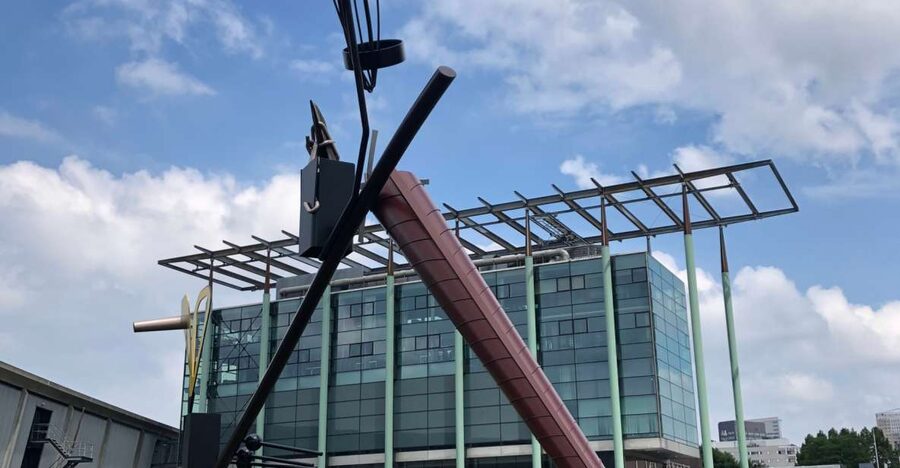
Rotterdam can feel unlike the Netherlands you may expect. Instead of a preserved old center filled with narrow canal houses, you find wide streets, new towers, experimental buildings, and spaces rebuilt after the city was bombed during the Second World War.
That contrast gives this walk a useful purpose. You are not simply ticking off attractive buildings. You are learning why the city looks so different, and how planners used rebuilding as a chance to try new ideas.
The tour begins at Rotterdam Central Station, next to the main entrance under the station clock. That is a practical meeting point, since the station is one of the city’s most recognizable landmarks and an easy place to find your guide.
From there, the route moves through central Rotterdam toward the Calypso building and Theater Square. You get an early lesson in the city’s taste for dramatic shapes and large-scale planning. If this is your first visit, that context helps you read the rest of the walk with sharper eyes.
More Walking Tours in Rotterdam
- Rotterdam: Architectural Highlights Guided Walking Tour
★ 4.8 · 215 reviews - Rotterdam: Highlights & Gems Walking Tour with Dutch Local
★ 5.0 · 133 reviews - Rotterdam 2-Hour Walking Tour | Discover The City With A Local
★ 4.5 · 111 reviews
Starting at Central Station and the Calypso building
Central Station is more than a place to meet. It is the first architectural statement of the tour, with a modern design that makes a strong opening to your Rotterdam visit.
The route then follows other central landmarks, including the Calypso building. The point is not just to look upward and admire unusual forms. A good guide connects these buildings to Rotterdam’s rebuilding and planning, showing you how architecture became part of the city’s identity.
Diana has been praised for explaining the historical and planning development of postwar Rotterdam from the station onward. That is useful because modern architecture can otherwise feel like a string of unrelated objects. With the right explanation, the buildings begin to form a story.
The walk also passes Theater Square. This area adds another layer to the route, showing how public spaces, cultural buildings, and apartment blocks fit into the city center. You may find this section more interesting if you enjoy urban planning rather than only famous landmarks.
Keep your camera ready, but do not rush the guide here. The opening section supplies much of the background you need for the later stops.
The Museum Quarter: Kunsthal, New Institute, and Boijmans Depot
The route continues through Rotterdam’s Museum Quarter, where three major cultural buildings shape the experience: the Kunsthal, The New Institute, and the Boijmans Depot.
The Kunsthal is known for changing exhibitions, while The New Institute focuses on architecture, design, and digital culture. You do not enter either museum on this tour, but seeing them as part of the city’s cultural district helps you understand Rotterdam’s interest in design beyond its famous skyline.
The Boijmans Depot is one of the most memorable stops from the outside. It is described as the first accessible museum depot in the world, and its mirrored exterior gives the building an unusual presence. A museum depot normally stores works away from public view. Here, the idea of storage itself becomes part of the architecture.
That is a good example of what this tour does best. It takes buildings that might look strange at first and gives you a reason to think about their purpose. If you want to go inside the depot, remember that entry tickets are not included, so plan that separately.
Because the tour is only 2.5 hours, you should not expect a full museum visit. Instead, you get an outdoor introduction to the buildings and their place in Rotterdam’s cultural life. I see this as a strength for a first day, especially if you want to save your museum time for later.
Public art and memories of the bombed city
Rotterdam’s art is not confined to galleries. Along the route, you see open-air works connected to the drama of the bombed city and the rebuilding that followed.
This section gives the walk emotional weight. The city’s modern architecture can look playful, glossy, or even futuristic, but it grew from a painful break with the past. Public art helps keep that story visible in the streets.
The route includes works associated with Henry Moore, Roden, Picasso, and Van Lieshout. Those names give you a sense of the range involved, from major modern sculpture to newer and more provocative forms of public art.
I like this part because it prevents the tour from becoming an architecture-only march. You are asked to look at sculpture, memorial ideas, and street art as part of the same urban story. You might find some pieces more appealing than others, but the variety keeps the walk moving.
The exact amount of time spent at each artwork can depend on the guide and the group. If a particular piece interests you, ask about it. A live guide gives you more room for questions than a self-guided route, and the tour’s strong reputation for informative explanations makes that worth using.
Other guided walks around Rotterdam:
- Walking Rotterdam Food Tour
★ 5.0 · 89 reviews - Rotterdam: City Center Walking Tour
★ 4.5 · 88 reviews - Rotterdam Architecture Highlights Walking Tour
★ 5.0 · 66 reviews - Rotterdam Walking Tour and Harbor Cruise
★ 4.7 · 59 reviews
Witte de Wit street and Rotterdam’s creative side
The route reaches Witte de Wit street, described as one of Rotterdam’s most artsy and lively streets. This is where the tour shifts from major civic buildings to a more social, street-level view of the city.
You see a part of Rotterdam associated with art venues, restaurants, and creative activity. The street helps balance the large buildings earlier in the walk. After looking at stations, museums, and postwar planning, you get a sense of how people use the city’s cultural spaces.
This stop is valuable because it shows that Rotterdam’s design culture is not only found in formal museums. It also appears in shopfronts, public spaces, galleries, and the way people gather in the center.
Do not expect a long break for food here. Food and drinks are not included, and the tour continues on foot. If you want a meal or coffee, arrange it before or after the activity rather than assuming the schedule will allow a stop.
The street can also feel busier than the quieter museum areas. That is part of its appeal, but it means the walking pace may not suit someone who wants a slow, private look at every building. For a first orientation, though, the change of mood works well.
Cube Houses: Rotterdam’s most playful detour
The Cube Houses are among the city’s best-known pieces of experimental architecture, and they bring a playful turn to the route.
Their angled forms challenge the usual idea of what a house should look like. From the outside, you can see why they have become a symbol of Rotterdam’s willingness to test unusual ideas in ordinary city life.
The tour focuses on the complex as part of the wider architectural story. That matters because the Cube Houses are not simply a strange photo background. They represent an attempt to rethink how homes can fit together in a dense urban setting.
You should also be ready for a practical limitation: the tour information does not include entry to a show house or other interior attraction. You will see and discuss the complex from the route, but any separate admission would be your responsibility.
This is one of the stops where a guide adds real value. Without context, the buildings can seem like a novelty. With an explanation of their design and place in Rotterdam, you can see them as part of the city’s larger experiment with form and urban space.
Ending at Markthal, where art meets architecture
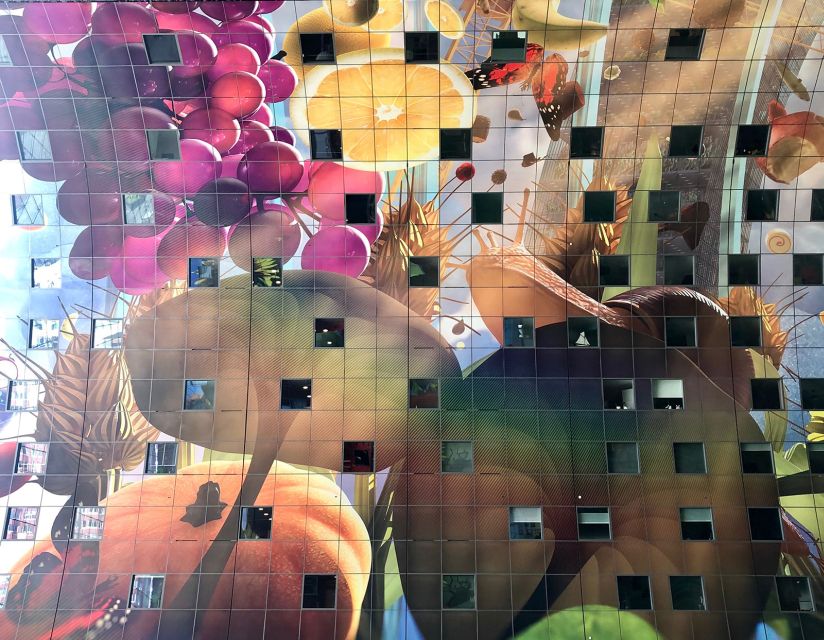
The walk ends at Markthal, a fitting final stop because it combines a huge architectural shell with a striking interior artwork.
By this point, you have seen public buildings, museums, street art, sculpture, and housing. Markthal brings those themes together in a single place. It is both a functioning market and a piece of modern architecture, so the ending feels more active than a final monument or viewing platform.
The interior art is a major reason to spend time here. Even if you do not buy food, you can look up and take in the large-scale design above the market floor. The tour helps you see the building as more than a place to eat.
Because the activity ends here, you have a convenient chance to continue exploring on your own. You can browse the market, find something to eat, or use the surrounding area as a base for the rest of your day. Just remember that food and drinks are not part of the tour price.
Ending at Markthal also gives the route a clear shape. You begin with the city’s main transport gateway and finish in one of its most recognizable contemporary public spaces.
What $65 gets you, and what it does not
At $65 per person, this is not the cheapest way to see Rotterdam’s center. You are paying for a live English-speaking guide, a planned route, and the explanation that links the sights together.
The value depends on how you normally visit a city. If you are happy to read signs, follow a map, and look up buildings on your phone, you may prefer to explore independently. If you want the city’s architecture explained as one connected story, the price is easier to justify.
You are not paying for transport, hotel pickup, food, drinks, or entry tickets. That keeps the tour focused on walking and commentary, but you should budget separately for any museum or depot visit.
The high rating of 4.9 from 10 reviews points to a very positive response, with the strongest praise centered on useful information and a good overview of Rotterdam. One rating of four stars described the tour as especially helpful for a first visit and for learning how to look at the city’s modern architecture and relationship with art.
That is the key value here. You finish with a framework for exploring on your own, not just a list of buildings.
Practical details for a comfortable walk
The meeting point is beside the main entrance to Rotterdam Central Station, under the station clock. Arrive with enough time to locate that spot, since a major station can be confusing if you are rushing.
Wear comfortable shoes. The tour lasts 2.5 hours and takes place outdoors, so seasonal clothing and weather protection matter. The activity runs rain or shine.
Oversize luggage is not allowed. Unaccompanied minors are also not permitted, so this is not a drop-off activity for children traveling alone.
The tour is wheelchair accessible, but the information says it is not suitable for people with visual or hearing impairments. That is important to consider before booking, since the experience depends on seeing the buildings and following a live spoken explanation.
The standard language is English. A private group option is available, which may suit you if you want a more personal pace or have a group with a specific interest in architecture and art.
You can cancel up to 24 hours in advance for a full refund, and you can reserve now and pay later. Those terms are useful if your Rotterdam plans are still shifting.
Who will enjoy this tour most
I would choose this walk for a first visit to Rotterdam, especially if you want an organized introduction before exploring museums or neighborhoods on your own.
It suits you if you enjoy:
- Modern architecture and urban planning
- Public art and sculpture
- Postwar European city history
- A guided overview rather than a long museum visit
- Walking between major sights without taking transport
- Understanding why Rotterdam looks the way it does
It may be less suitable if you want deep interior visits, lots of free time at each building, or a food-focused outing. The tour gives you a broad route and a clear explanation, but it does not include admission tickets or a meal.
The pace also matters. You are covering several parts of central Rotterdam in 2.5 hours. If you need frequent stops or prefer a very slow walk, a private group may be the better choice.
Should you book the Rotterdam architecture walk?
Book it if you want Rotterdam’s buildings to make sense rather than simply appear unusual. The route combines Central Station, the Museum Quarter, public art, Witte de Wit street, Cube Houses, and Markthal in a compact half-day introduction.
I especially like the focus on the city’s postwar development and the way art is treated as part of everyday Rotterdam. The strongest guide, such as Diana, can turn the walk into a clear lesson in planning, memory, and design.
Skip it if you want museum entry, food, transport, or a tour built around historic Dutch architecture. Rotterdam’s appeal here is its modern character, and this experience is best when you are ready to walk outside, listen closely, and look at the city with fresh attention.
FAQ
Where does the tour meet?
The meeting point is next to the main entrance of Rotterdam Central Station, under the station clock.
How long does the tour last?
The walking tour lasts 2.5 hours.
What language is the tour in?
The live guided tour is conducted in English.
Are museum entry tickets included?
No. Entry tickets are not included, so any museum or other admission costs must be paid separately.
Does the tour run in bad weather?
Yes. The tour takes place rain or shine. You should wear comfortable shoes and weather-appropriate seasonal clothing.
Is the tour wheelchair accessible?
Yes, the activity is listed as wheelchair accessible. It is not considered suitable for people with visual or hearing impairments.
Just added in Rotterdam
- Rotterdam: City Walk Audio Guide in 7 Languages on your Phone★ 3.5 · 6 reviews
- e-Scavenger hunt Rotterdam: Explore the city at your own pace★ 4.5 · 13 reviews
- Rotterdam Must Do Tour: Highlights, History, WW2 and Architecture★ 5.0 · 20 reviews
- e-Scavenger hunt Breda: Explore the city at your own pace★ 4.5 · 27 reviews
- All-Inclusive Private Windmill Tour to Kinderdijk from Rotterdam★ 4.5 · 59 reviews
- Discover Rotterdam: Classic Highlights Bike Tour with a Local★ 5.0 · 22 reviews
- Rotterdam in half a day: All-inclusive, Authentic private Tour of Rotterdam★ 5.0 · 146 reviews
- Discover Breda with a self-guided Outside Escape city game tour!★ 5.0 · 16 reviews
Walking Tours, compared.
Anne Frank’s Story – Guided Walking Tour through Amsterdam
Read our review →
Life of Anne Frank and World War II Walking Tour
Read our review →
Anne Frank Walking Tour – Guided in EN/DE/IT/ES
Read our review →

Anne Frank Walking Tour Amsterdam Including Jewish Cultural Quarter
Read our review →
Amsterdam Highlights Walking Tour: Small Group Experience
Read our review →Browse the lists this tour appears in